Mind Your Own Business and Work Hard

Make it your goal to live a quiet life, minding your own business and working with your hands, just as we instructed you before. Then people who are not believers will respect the way you live, and you will not need to depend on others.
1 Thessalonians 4:11‭-‬12 NLT

Life Application Study Bible
There is more to Christian living than simply loving other Christians. We must be responsible in all areas of life. Some of the Thessalonian Christians had adopted a life of idleness, depending on others for handouts. Some Greeks looked down on manual labor. So Paul told the Thessalonians to work hard and live a quiet life. You can’t be effective in sharing your faith with others if they don’t respect you. Whatever you do, do it faithfully and be a positive force in society.

Paul speaks a second time about this issue in this letter to the Thessalonian believers:

Brothers and sisters, we urge you to warn those who are lazy. Encourage those who are timid. Take tender care of those who are weak. Be patient with everyone.
1 Thessalonians 5:14 NLT

And in his follow up letter to the Thessalonians, we see him speaking even more directly, after he starts to end his letter in 2 Thessalonians 3:1-5, but then shares that he “must share this command”:

Now we command you, brothers, in the name of our Lord Jesus Christ, that you keep away from any brother who is walking in idleness and not in accord with the tradition that you received from us.
2 Thessalonians 3:6 ESV

I like the sermon notes from Dr. Ralph F. Wilson on this topic (found here http://www.jesuswalk.com/thessalonians/09_idleness.htm ):

This phrase variously translated “idle” (NIV), “living in idleness” (NRSV), “walketh disorderly” (KJV) — both here and in verse 11 — is a combination of the verb parapateō, “walk, conduct oneself” and the adverb ataktos, which means, “not in the proper order.”[311] The related verb, atakteō, is found in verse 7. Originally, it referred to soldiers marching out of order or quitting the ranks, thus it has the idea of “to be neglectful of duty, to be lawless.”[312]

Instead of doing their fair share to support themselves and help the poor in the Christian community, these idlers are lazy, hanging around other believers, and then expecting to be asked for dinner and given a place to sleep — night after night!

“Command” is a strong verb, parangellō, used here and in verses 10 and 12: “to make an announcement about something that must be done, give orders, command, instruct, direct.” It is a word used by people in authority — worldly rulers, Jesus, the apostles, etc.[313]

Paul isn’t talking about people who can’t earn a living because of sickness, mental instability, age, or infirmity. He isn’t talking about widows who have no support, or orphans whose parents have died. He’s talking about people who could work, but don’t.

Paul’s command to the believers is to “keep away” from these lazy people.

And:

Paul isn’t teaching a so-called “Protestant work ethic” here.[314] Rather he is teaching the concept of taking responsibility for oneself and one’s family, a basic concept that is found throughout the Bible. Paul reiterates this concept to Timothy:

“If anyone does not provide for his relatives, and especially for his immediate family, he has denied the faith and is worse than an unbeliever.” (1 Timothy 5:8)

Paul ran across laziness elsewhere. In the church of Ephesus he gives instructions to former thieves: Get a job, do something productive, so that you may add to the community, not take away from it.

“He who has been stealing must steal no longer, but must work, doing something useful with his own hands, that he may have something to share with those in need.” (Ephesians 4:28)

Hard work is the norm laid out in Genesis:

“By the sweat of your brow you will eat your food….” (Genesis 3:19a)

The book of Proverbs especially is pretty hard on “sluggards.” Here are some examples:

“Go to the ant, you sluggard;
consider its ways and be wise!” (Proverbs 6:6)

“Lazy hands make a man poor,
but diligent hands bring wealth.
He who gathers crops in summer is a wise son,
but he who sleeps during harvest is a disgraceful son.” (Proverbs 10:4-5)

“The sluggard craves and gets nothing,
but the desires of the diligent are fully satisfied.” (Proverbs 13:4)

“One who is slack in his work is brother to one who destroys.” (Proverbs 18:9)

“The sluggard’s craving will be the death of him,
because his hands refuse to work.
All day long he craves for more,
but the righteous give without sparing.” (Proverbs 21:25-26)

“A sluggard does not plow in season;
so at harvest time he looks but finds nothing.” (Proverbs 20:4)

“I went past the field of the sluggard,
past the vineyard of the man who lacks judgment;
thorns had come up everywhere,
the ground was covered with weeds,
and the stone wall was in ruins.
I applied my heart to what I observed
and learned a lesson from what I saw:
A little sleep, a little slumber, a little folding of the hands to rest —
and poverty will come on you like a bandit
and scarcity like an armed man.” (Proverbs 24:30-34)

“The sluggard is wiser in his own eyes
than seven men who answer discreetly.” (Proverbs 26:16)

“If a man is lazy, the rafters sag;
if his hands are idle, the house leaks.” (Ecclesiastes 10:18)

Women, too, were responsible to do their share.

“[The capable wife] watches over the affairs of her household
and does not eat the bread of idleness.” (Proverbs 31:27)

Paul advises Timothy not to put younger women on a list of widows who receive support from the church. Rather they should remarry. It’s obvious by his comments that he’s seen the result of idle women harming the church because they have too much time on their hands.

“As for younger widows, do not put them on such a list…. They get into the habit of being idle[315] and going about from house to house. And not only do they become idlers, but also gossips and busybodies, saying things they ought not to.” (1 Timothy 5:11, 13)

Paul teaches the same lessons to others. To the Ephesian elders, he said:

“You yourselves know that these hands of mine have supplied[316] my own needs and the needs of my companions. In everything I did, I showed you that by this kind of hard work we must help[317] the weak, remembering the words the Lord Jesus himself said: ‘It is more blessed to give than to receive.'” (Acts 20:34-35)

To the Corinthians he says,

“We work hard with our own hands….” (1 Corinthians 4:12a)

For the believers in Crete, Paul instructed Titus:

“Our people must learn to devote themselves to doing what is good, in order that they may provide for daily necessities and not live unproductive lives.” (Titus 3:14)

The Bible is consistent here. We are to work so that we can care for our own needs, and for those who are weak and can’t work.

And for those who would point their judgemental fingers at full time Christian workers, preachers, ministers or missionaries who depend on support to continue in their life’s dedication to the Lord’s work, he makes a distinction between faithfully supporting the ministers of the church versus enabling the idle:

One’s own personal example is powerful. Paul’s lifestyle was abundantly clear to the Thessalonian believers. Let’s look at the elements of verse 8.

  1. “Toil” (NIV), “labor” (NRSV, KJV), kopos, carries the idea “to engage in activity that is burdensome, work, labor, toil.”[320]
  2. “Hardship” (NIV), “toil” (NRSV), “travail” (KJV) is mochthos, “labor, exertion, hardship.”[321] Robertson notes that it is an “old word for difficult labor, harder than kopos (toil).”[322]
  3. “Worked” (NIV, NRSV), “laboring” (KJV) is ergazomai, “to engage in activity that involves effort, work.”[323]

Hard work isn’t to be avoided or to be ashamed of; it is part of the life of a disciple of Jesus!

Notice that in 3:9, Paul does not say that all apostles or Christian workers should support themselves! Let’s not over interpret this.

“We did this, not because we do not have the right[324]to such help, but in order to make ourselves a model for you to follow.” (3:9)

His purpose is to give the believers an example or model[325]of hard work, not to set a precedent for all Christian workers. To the Corinthians he outlines the case for supporting Christian workers, and reserves his right to be supported for his work in the gospel, while choosing not to exercise it.

“Don’t we have the right to food and drink? Don’t we have the right to take a believing wife along with us, as do the other apostles and the Lord’s brothers and Cephas? … If others have this right of support from you, shouldn’t we have it all the more? But we did not use this right. On the contrary, we put up with anything rather than hinder the gospel of Christ.” (1 Corinthians 9:4-5, 12)

So we don’t use this “command to work hard” as some weapon to hold as justification for our holding onto “our precious money” by refusing to support the church and those in full time ministerial positions — that is sin, and must be repented, you who are greedy and judgemental and hard hearted.

No, this is meant for discipline and clear guidance when dealing with lazy, and people — who seek to use others to enable their slothful and unproductive lifestyle choices:

“For even when we were with you, we gave you this rule: ‘If a man will not work,[326] he shall not eat.'” (3:10)

Observe four things here.

  1. Persistent sin. The problem of laziness had existed from the church’s foundation — and Paul had taught about it then.
  2. Command. Paul’s instruction about work at the founding of the church wasn’t just a suggestion, but a command.[327]
  3. Willful sin. The issue is obedience to the Biblical injunction. The lazy believers know what the Bible says, but resist it. The will[328] is at stake here. Paul isn’t talking about those who can’t find work, those who are homeless against their will, or who are physically or mentally unable to work, but those who have no intention of working to support themselves.
  4. Consequences of actions. Paul commands the believers to step back from continually “bailing out” the lazy people, and let the consequences of their actions teach them what they won’t learn otherwise. Don’t feed them — and don’t feel guilt about it yourself

Why is this so important?

11 We hear that some among you are idle. They are not busy; they are busybodies.
12 Such people we command and urge in the Lord Jesus Christ to settle down and earn the bread they eat. 13 And as for you, brothers, never tire of doing what is right.” (3:11-13)

The laziness is causing two problems in the body.

1. Lazy people become busybodies and meddlers who hurt relationships in the body. Verse 11b includes a play on words that the NIV captures to some extent:

“They are not busy (ergazomai); they are busybodies (periergazomai).”

“Busybodies” is periergazomai, “to be intrusively busy, be a busybody, meddler.”[329] Thayer defines it, “to bustle about uselessly, to busy oneself about trifling, needless, useless matters.”[330]

Later in his ministry, Paul sees the same problem of busybodies in Ephesus among young widows with time on their hands.[331]

The situation at Thessalonica is serious and must be fixed. That’s why Paul can’t just hint at a solution. So in verse 12, Paul both uses two strong verbs, “we command (parangellō) and urge (“exhort,” KJV, NRSV, parakaleō) in the Lord Jesus Christ” (cf. 3:1, 10). The command is:

“To settle down and earn the bread they eat.” (3:12b)

The phrases “settle down and earn” (NIV), “work quietly” (NRSV), “with quietness work” (KJV) translate three words: the verb ergazomai, “work” (which we’ve seen several times in this passage), the preposition meta, “with,” and the noun hēsychia, “state of quietness without disturbance, quietness, rest,” that is, living in a way that does not cause disturbance.[332] I think that the NIV’s “settle down and earn” catches the idea well. These lazy people are stirring up others with their gossipy, busybody behavior. People resent them. The church is disturbed about it. So the lazy people are commanded to begin to work and stop stirring things up. As they begin to work, the dissension in the body will quiet down.

2. Lazy people can “burn out” or discourage church members from being generous and outgoing to the truly needy. The great majority of the believers at Thessalonica, no doubt, earn their own living, but have been putting up with the Christian freeloaders for far too long. They’re tired of it. They’ve worn themselves out trying to do the “loving” thing. Paul wants to encourage them keep on doing good works — just not to enable the lazy believers among them.

“And as for you, brothers, never tire of doing what is right.” (3:13)

“Never tire” (NIV), “do not be weary” (NRSV, cf. KJV) is ekkakeō, “lose heart,”[333] literally, “to be utterly spiritless, to be wearied out, exhausted.”[334] Elsewhere, the New Testament exhorts people not to let discouragement immobilize them:

“Therefore, since through God’s mercy we have this ministry, we do not lose heart.” (2 Corinthians 4:1)

“I ask you, therefore, not to be discouraged because of my sufferings for you, which are your glory.” (Ephesians 3:13)

“Therefore we do not lose heart. Though outwardly we are wasting away, yet inwardly we are being renewed day by day.” (2 Corinthians 4:16)

“Consider him who endured such opposition from sinful men, so that you will not grow weary and lose heart.” (Hebrews 12:3)

Having worked with those in need trying to help get them back on their feet after tragedy, addiction, unforeseen circumstances, and consequences of poor decisions — I can tell you that laziness and idleness in a person that you are trying to help is a immediate red flag. When we have ignored the signs, and continued trying to help someone who is not eager and willing to work hard to provide for themselves and their family — when we have shifted from equipping to enabling — it has always cost them and cost us as well. To avoid this trap, we must be conscious and intentional with our boundaries and limits (which can receive accusations of being cold and cruel), but is necessary and best.

“Our people must learn to devote themselves to doing what is good, in order that they may provide for daily necessities and not live unproductive lives.” (Titus 3:14)

Lord, help us and guide us in such things, to your glory and honor, Amen!

Who might we be overlooking

This morning’s verse is:

But the Lord said to Samuel, “Don’t judge by his appearance or height, for I have rejected him. The Lord doesn’t see things the way you see them. People judge by outward appearance, but the Lord looks at the heart.
1 Samuel 16:7 NLT

I love this historical narrative from the appointment of a son of Jesse to be King of Israel.When studying this part of Israel’s past, we find that the people had chosen Saul as their King because of their own preconceived notions about things like appearance and height — and that God allowed them to make a poor decision instead of consulting Him and trusting in God’s appointment alone — but that Saul proved to be a bad King, and turned away from the Lord, and was rejected by the Lord. And the Lord told the prophet Samuel that a new King would be appointed, and that it would be a son of Jesse, and told Samuel to go to Jesse and that God would reveal which son it would be.

Now the Lord said to Samuel, “You have mourned long enough for Saul. I have rejected him as king of Israel, so fill your flask with olive oil and go to Bethlehem. Find a man named Jesse who lives there, for I have selected one of his sons to be my king.”
1 Samuel 16:1 NLT

Samuel came into the town and was performing a purification ceremony and sacrifice so that it would not yet be clearly evident to the people why he was there and what he was doing. And Jesse and his sons were invited. As the sons of Jesse arrive, Samuel looks at them and we see him make the same mistake that the people had made in choosing Saul, and this is where our verse this morning comes from:

When they arrived, Samuel took one look at Eliab and thought, “Surely this is the Lord ’s anointed!” But the Lord said to Samuel, “Don’t judge by his appearance or height, for I have rejected him. The Lord doesn’t see things the way you see them. People judge by outward appearance, but the Lord looks at the heart.”
1 Samuel 16:6‭-‬7 NLT

Samuel, because he was an imperfect man, fell into the same trap — he judged with his eyes. If Samuel had made the decision with his own judgement and conscience, showing preference to his own poor choice for a king, he would have also overlooked and the people would have missed out on the opportunity of God’s chosen King. And even Jesse, the father, had overlooked David and left him tending the sheep in the field.

In the same way all seven of Jesse’s sons were presented to Samuel. But Samuel said to Jesse, “The Lord has not chosen any of these.” Then Samuel asked, “Are these all the sons you have?” “There is still the youngest,” Jesse replied. “But he’s out in the fields watching the sheep and goats.” “Send for him at once,” Samuel said. “We will not sit down to eat until he arrives.” So Jesse sent for him. He was dark and handsome, with beautiful eyes. And the Lord said, “This is the one; anoint him.” So as David stood there among his brothers, Samuel took the flask of olive oil he had brought and anointed David with the oil. And the Spirit of the Lord came powerfully upon David from that day on. Then Samuel returned to Ramah.
1 Samuel 16:10‭-‬13 NLT

Such a beautiful reminder that God knows better than us the true value and right appointments of His people. When people measure and compare by outwardly measurable metrics alone and do not consult with the Lord — the resulting appointments are out of order, skewed, and aren’t best.This should have us asking ourselves — who am I showing potential treatment towards in my life — and as a result, who might I be overlooking?And what idols and distractions and temptations have my attention that could be laid aside so that I could have Christ as King, the perfect and best?Have we overlooked and rejected Christ because of the desires of our flesh, the desires of our eyes, our ot of our own pride — we should know that this is the root of all sin, and we should repent, and seek God’s counsel instead.

It doesn’t matter what I say or what they say, but only matters what YOU SAY oh, Lord.

Lord, help us to consult with you constantly, to pray without ceasing because we are walking with you. Guide or every decision not by or flawed and biased measurements and reasoning, but by your perfect revelation. Amen.

Our related Sticky Situations devotional this morning:

Today’s Forecast: Victorious Living

My morning wake up verse was 2 Peter 3:14 that is an element of how we should be living in “these last days”:

But the day of the Lord will come as unexpectedly as a thief. Then the heavens will pass away with a terrible noise, and the very elements themselves will disappear in fire, and the earth and everything on it will be found to deserve judgment. Since everything around us is going to be destroyed like this, what holy and godly lives you should live, looking forward to the day of God and hurrying it along. On that day, he will set the heavens on fire, and the elements will melt away in the flames. But we are looking forward to the new heavens and new earth he has promised, a world filled with God’s righteousness. And so, dear friends, while you are waiting for these things to happen, make every effort to be found living peaceful lives that are pure and blameless in his sight.
2 Peter 3:10‭-‬14 NLT

The Life Application Study Bible comments on this verse:

We should not become lazy and complacent because Christ has not yet returned. Instead, we should live in eager expectation of his coming. What would you like to be doing when Christ returns? That is how you should be living each day.

And our family devotion from Sticky Situations this morning was about not caving to peer pressure that might tempt us into compromising a life that is

pure and blameless in his sight.

And doing this by making:

every effort to be found living peaceful lives

Here is the devotional:

And here is the answer key:

It references two passages in Deuteronomy for reference:

And when you look up into the sky and see the sun, moon, and stars—all the forces of heaven—don’t be seduced into worshiping them. The Lord your God gave them to all the peoples of the earth.
Deuteronomy 4:19 NLT

“When you enter the land the Lord your God is giving you, be very careful not to imitate the detestable customs of the nations living there. For example, never sacrifice your son or daughter as a burnt offering. And do not let your people practice fortune-telling, or use sorcery, or interpret omens, or engage in witchcraft, or cast spells, or function as mediums or psychics, or call forth the spirits of the dead. Anyone who does these things is detestable to the Lord . It is because the other nations have done these detestable things that the Lord your God will drive them out ahead of you. But you must be blameless before the Lord your God. The nations you are about to displace consult sorcerers and fortune-tellers, but the Lord your God forbids you to do such things.”
Deuteronomy 18:9‭-‬14 NLT

And we can find many pages in the New Testament as well that teach us about Holy Living, about Christian Living:

If you are kind only to your friends, how are you different from anyone else? Even pagans do that. But you are to be perfect, even as your Father in heaven is perfect.
Matthew 5:47‭-‬48 NLT

And a sermon that I found from Spurgeon this morning on thos very verses proves powerful on this subject: https://www.blueletterbible.org/Comm/spurgeon_charles/sermons/1029.cfm

Spurgeon speaks plainly and clearly on this topic:

We are justified by faith, and not by the works of the law. The merit by which a soul enters heaven is not its own; it is the merit of our Lord and Savior Jesus Christ. I am quite sure that you will all hold me guiltless of ever having spoken about this great doctrine in any other than unmistakable language; if I have erred, it is not in that direction. At the same time, it is a dangerous state of things if doctrine is made to drive out precept, and faith is held up as making holiness a superfluity. Sanctification must not be forgotten or overlaid by justification. We must teach plainly that the faith which saves the soul is not a dead faith, but a faith which operates with purifying effect upon our entire nature, and produces in us fruits of righteousness to the praise and glory of God. It is not by personal holiness that a man shall enter heaven, but yet without holiness shall no man see the Lord. It is not by good works that we are justified, but if a man shall continue to live an ungodly life, his faith will not justify him; for it is not the faith of God’s elect; since that faith is wrought by the Holy Spirit, and conforms men to the image of Christ...
Precepts are not given to us as a way to obtain life, but as the way in which to exhibit life. The commands of Christ are not upon the legal tenor of “this do and live,” but upon the gospel system of “live and do this.” We are not to be attentive to the precepts in order to be saved, but because we are saved. Our master motive is to be gratitude to him who has saved us with a great salvation. I am sure that every renewed heart here will feel no opposition to the most holy precepts of our Lord...
The regenerate never rebel against any precept, saying, “This, is too pure;” on the contrary, our new-born nature is enamoured of its holiness, and we cry, “Thy word is very pure, therefore thy servant loveth it. O that my ways were directed to keep thy statutes.”
Even though we find that when we would do good evil is present with us, yet our inmost soul longs after holiness, and pines to be delivered from every evil way. At any rate, Dear friends, if it be not so with you, you may well question whether you are indeed the children of God. My desire, this morning, is to insist upon the precepts which tend to holiness, and I pray the Holy Spirit to excite desires after a high degree of purity in all believing, hearts.
Too many persons judge themselves by others; and if upon the whole they discover that they are no worse than the mass of mankind, they give themselves a mark of special commendation
they go to their place of worship as if they were saints, and bear the name of Christian as if it belonged to them; they share in Christian privileges, and sit with God’s people, as if they were truly of the family, their marks and evidences being just these, that they do about as much upon the whole as other people, and if they are not first they are not altogether last. The nests of such people ought to be grievously disturbed when they read the chapter before us, for there the Master insists upon a higher standard than the world’s highest, and tells us that except our righteousness exceeds that of the scribes and Pharisees, we cannot enter into the kingdom of heaven...

what is the indwelling Spirit within us? Is he not Omnipotence itself? The Holy Ghost who has come upon us is no influence which might be limited in its efficacy; but he is a divine person, who dwelleth with us and shall be in us. Who shall set any limit to the power of that man in whom the Holy Ghost himself dwells? All believers, are must never dare to say, “That habit we cannot give up.” We can and must overturn all the idols in our hearts. We may never say, “That height of devotion I can never reach.”
We are never to sit down and say, “I must be a sinner up to such-and-such a point; I cannot get beyond that attainment.” What saith the Scripture? “Be ye perfect even as your Father which is in heaven is perfect;” after this perfection we are to strain, and towards this mark of our high calling we are to press. God who dwells in us is working in us daily to will and to do according to his own good pleasure, so that we can do what the dead sinner cannot do; we can do what sinners, without the Spirit, cannot do; and, if we can, we must. Surely, it is required of a man according to what he hath, and where much is given much will be required. Let us take care that we quench not the Spirit, that by our unbelief we restrain not his divine energies; but let us strive, God striving in us, after the highest conceivable standard of holiness and of separation from the world. O Spirit of God, do thou help us that we may be sanctified by thy grace, spirit, soul, and body.

Oh, Holy Spirit of God, help us so that we will be sanctified by your grace, made holy as you are holy, in our Spirit, Soul, Body, Mind, Words, Actions and innermost Being. Amen.

Keep Praying

My morning “wake up” devotional verse this morning was:

But you must not forget this one thing, dear friends: A day is like a thousand years to the Lord, and a thousand years is like a day. The Lord isn’t really being slow about his promise, as some people think. No, he is being patient for your sake. He does not want anyone to be destroyed, but wants everyone to repent.
2 Peter 3:8‭-‬9 NLT

And the Life Application Study Bible had these notes to consider on this verse:

God may have seemed slow to these believers as they faced persecution every day and longed to be delivered. But God is not slow; he just is not on our timetable. Jesus is waiting so that more sinners will repent and turn to him. We must not sit and wait for Christ to return, but we should live with the realization that time is short and that we have important work to do. Be ready to meet Christ any time, even today; yet plan your course of service as though he may not return for many years.

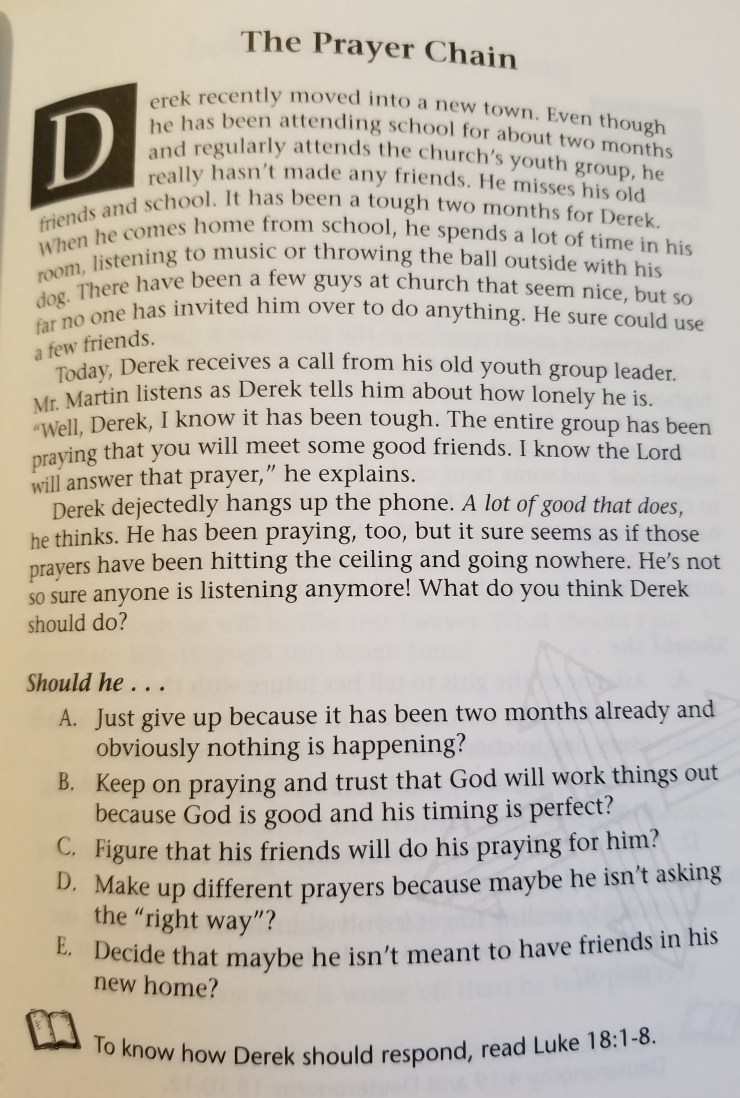
Then, Mia came down to join us for our morning family devotional, and the Sticky Situations devotional for Kids and Families had this to share:

And had us reading and considering this page from Luke:

One day Jesus told his disciples a story to show that they should always pray and never give up. “There was a judge in a certain city,” he said, “who neither feared God nor cared about people. A widow of that city came to him repeatedly, saying, ‘Give me justice in this dispute with my enemy.’ The judge ignored her for a while, but finally he said to himself, ‘I don’t fear God or care about people, but this woman is driving me crazy. I’m going to see that she gets justice, because she is wearing me out with her constant requests!’” Then the Lord said, “Learn a lesson from this unjust judge. Even he rendered a just decision in the end. So don’t you think God will surely give justice to his chosen people who cry out to him day and night? Will he keep putting them off? I tell you, he will grant justice to them quickly! But when the Son of Man returns, how many will he find on the earth who have faith?”
Luke 18:1‭-‬8 NLT

I immediately saw patient endurance and faith as the 10,000ft view (the revelation of truth) that I need to be mindful of, and consistency in my own prayer life as the primary target (the area of application) where I can repent and grow.

I can at times find myself studying and growing in knowledge and familiarity with the scriptures themselves, but also finding the fervency of my prayer life waning. When I’ve prayed time and time again around and over an issue or circumstance looking for a solution, I sometimes forget that praying and praising through the trial is the picture of faith.

I also sometimes get hung up on the issues that are closest to me, that are affecting me daily, that are uncomfortable for me — and I forget that these are my “opportunities to suffer gracefully to the glory of God” — and that even these aren’t persecution, but are usually just consequences of my own poorly chosen decisions.

I am realizing that many times I have been missing opportunities to pray for the very real needs of others (that are seemingly far more challenging and desperate than my want). I not only overlook my own blessed life, but pick apart what isn’t “perfect” and “comfortable” by my own standards of want, while others are facing very real need. When there are those around me truly suffering every day, why do I find myself forgetting them too often in my prayers and instead grumbling to God about every little thing that isn’t comfortable or easy for me in the moment?

It’s humbling to see how quickly I can fall into a selfish, grumbling mindset.

It’s humbling to see how easily I lose faith in trusting that God has a plan, a purpose, and perfect timing.

So now, instead of continuing to “write and preach” this morning — I’m confessing that I’m just a needy student and disciple of the Word like you, friend. I don’t have it all nailed down. I’m not getting it all right. It seems to me like I stumble more than I walk. I look at this perfect example of Christ in the written Word, and I find myself not just a step or two short of ther glory of God, but far on the other end of the spectrum. If measuring the evidence of our own godliness along a chart the length of a marathon, I wonder if we have even progressed the width of a single hair? When I remember that there is no good in us apart from Christ, I am reminded of our utter need.

It is no coincidence that the next page in Luke is also about prayer:

Then Jesus told this story to some who had great confidence in their own righteousness and scorned everyone else: “Two men went to the Temple to pray. One was a Pharisee, and the other was a despised tax collector. The Pharisee stood by himself and prayed this prayer : ‘I thank you, God, that I am not like other people—cheaters, sinners, adulterers. I’m certainly not like that tax collector! I fast twice a week, and I give you a tenth of my income.’ “But the tax collector stood at a distance and dared not even lift his eyes to heaven as he prayed. Instead, he beat his chest in sorrow, saying, ‘O God, be merciful to me, for I am a sinner.’ I tell you, this sinner, not the Pharisee, returned home justified before God. For those who exalt themselves will be humbled, and those who humble themselves will be exalted.”
Luke 18:9‭-‬14 NLT

I wonder how much more our prayers about ourselves ought to be humble prayers seeking forgiveness, mercy, and the granting to us of repentance — while pleas for blessing and favor and healing might be best poured out first and foremost onto the need all around us? I wonder how often I have this backwards in a self serving manner?

What is causing the quarrels and fights among you? Don’t they come from the evil desires at war within you? You want what you don’t have, so you scheme and kill to get it. You are jealous of what others have, but you can’t get it, so you fight and wage war to take it away from them. Yet you don’t have what you want because you don’t ask God for it. And even when you ask, you don’t get it because your motives are all wrong—you want only what will give you pleasure. You adulterers! Don’t you realize that friendship with the world makes you an enemy of God? I say it again: If you want to be a friend of the world, you make yourself an enemy of God. Do you think the Scriptures have no meaning? They say that God is passionate that the spirit he has placed within us should be faithful to him. And he gives grace generously. As the Scriptures say, “God opposes the proud but gives grace to the humble.” So humble yourselves before God. Resist the devil, and he will flee from you. Come close to God, and God will come close to you. Wash your hands, you sinners; purify your hearts, for your loyalty is divided between God and the world. Let there be tears for what you have done. Let there be sorrow and deep grief. Let there be sadness instead of laughter, and gloom instead of joy. Humble yourselves before the Lord, and he will lift you up in honor.
James 4:1‭-‬10 NLT

Lord, help us pray rightly and consistently and humbly close with you. Amen.

Prove That You Really Are

So, dear brothers and sisters, work hard to prove that you really are among those God has called and chosen. Do these things, and you will never fall away.
2 Peter 1:10 NLT

Life Application Study Bible
Peter wanted to rouse the complacent believers who had listened to the false teachers and believed that because salvation is not based on good deeds, they could live any way they wanted. If you truly belong to the Lord, Peter wrote, your hard work will prove it. If you’re not working to develop the qualities listed in 2 Peter 1:5-7, maybe you don’t belong to him. If you are the Lord’s-and your hard work backs up your claim to be chosen by God (“called and chosen”)-you will never be led astray by the lure of false teaching or glamorous sin.

So we should ask ourselves — if I say that I am a Child of God, is my life developing to demonstrate such an extraordinary claim?

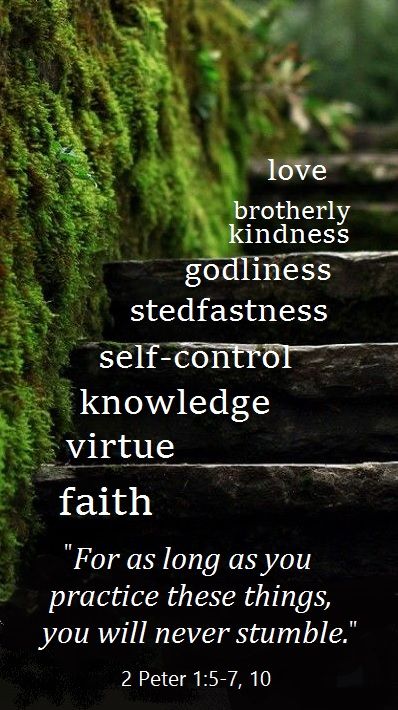
In view of all this, make every effort to respond to God’s promises. Supplement your faith with a generous provision of moral excellence, and moral excellence with knowledge, and knowledge with self-control, and self-control with patient endurance, and patient endurance with godliness, and godliness with brotherly affection, and brotherly affection with love for everyone.
2 Peter 1:5‭-‬7 NLT

What does this look like?

But the Holy Spirit produces this kind of fruit in our lives: love, joy, peace, patience, kindness, goodness, faithfulness, gentleness, and self-control. There is no law against these things! Those who belong to Christ Jesus have nailed the passions and desires of their sinful nature to his cross and crucified them there. Since we are living by the Spirit, let us follow the Spirit’s leading in every part of our lives.
Galatians 5:22‭-‬25 NLT

This isn’t a demonstration of our “worthiness” or our “earning” anything — because no man or woman is worthy in and of themselves, nor can any man earn his own way — all fall short of the glory of God.

For everyone has sinned; we all fall short of God’s glorious standard.
Romans 3:23 NLT

God looks down from heaven on the entire human race; he looks to see if anyone is truly wise, if anyone seeks God. But no, all have turned away; all have become corrupt. No one does good, not a single one!
Psalms 53:2‭-‬3 NLT

The things that Peter describes in 2 Peter 1 that we should “Do these things, and shall never fall away” are:

faith…

moral excellence…

knowledge…

self-control…

patient endurance…

godliness…

brotherly affection…

love for everyone.

You see these are character/nature/ being and not a checklist of actions. So this is a demonstration of either Christ alive in us, God making His tabernacle with His people, in them and through them with those He has called and chosen — or the absence of such a personal and life altering relationship with Almighty God.

“I am the true grapevine, and my Father is the gardener. He cuts off every branch of mine that doesn’t produce fruit, and he prunes the branches that do bear fruit so they will produce even more. You have already been pruned and purified by the message I have given you. Remain in me, and I will remain in you. For a branch cannot produce fruit if it is severed from the vine, and you cannot be fruitful unless you remain in me. “Yes, I am the vine; you are the branches. Those who remain in me, and I in them, will produce much fruit. For apart from me you can do nothing. Anyone who does not remain in me is thrown away like a useless branch and withers. Such branches are gathered into a pile to be burned. But if you remain in me and my words remain in you, you may ask for anything you want, and it will be granted! When you produce much fruit, you are my true disciples. This brings great glory to my Father. “I have loved you even as the Father has loved me. Remain in my love. When you obey my commandments, you remain in my love, just as I obey my Father’s commandments and remain in his love. I have told you these things so that you will be filled with my joy. Yes, your joy will overflow! This is my commandment: Love each other in the same way I have loved you. There is no greater love than to lay down one’s life for one’s friends. You are my friends if you do what I command. I no longer call you slaves, because a master doesn’t confide in his slaves. Now you are my friends, since I have told you everything the Father told me. You didn’t choose me. I chose you. I appointed you to go and produce lasting fruit, so that the Father will give you whatever you ask for, using my name. This is my command: Love each other.
John 15:1‭-‬17 NLT

The fruit comes from God and is the trustworthy and true evidence of His indwelling His children. It isn’t how religious someone is, or how much they know “about” God — do you truly know and love God? Does He truly know you and live in and through you?

“Beware of false prophets who come disguised as harmless sheep but are really vicious wolves. You can identify them by their fruit, that is, by the way they act. Can you pick grapes from thornbushes, or figs from thistles? A good tree produces good fruit, and a bad tree produces bad fruit. A good tree can’t produce bad fruit, and a bad tree can’t produce good fruit. So every tree that does not produce good fruit is chopped down and thrown into the fire. Yes, just as you can identify a tree by its fruit, so you can identify people by their actions. “Not everyone who calls out to me, ‘Lord! Lord!’ will enter the Kingdom of Heaven. Only those who actually do the will of my Father in heaven will enter. On judgment day many will say to me, ‘Lord! Lord! We prophesied in your name and cast out demons in your name and performed many miracles in your name.’ But I will reply, ‘I never knew you. Get away from me, you who break God’s laws.’
Matthew 7:15‭-‬23 NLT

If you look at your life today, and you can see your need to be changed, your need to be reborn, to be washed from your sin and changed on the inside to sell after and grow and live in the ways of God, for His glory instead of for your own, I have Good News for you, friend.

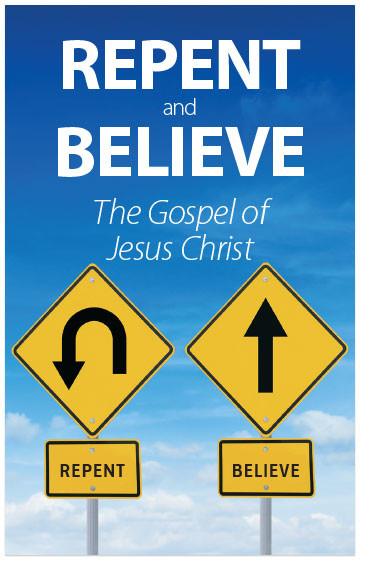
If you have never truly repented and believed,

If you have always opposed God or just given Him lip service or Sunday service,

Never truly surrendered your whole life because you believe His way is the only way, the only truth, the only life,

Read this Good News:

Later on, after John was arrested, Jesus went into Galilee, where he preached God’s Good News. “The time promised by God has come at last!” he announced. “The Kingdom of God is near! Repent of your sins and believe the Good News!
Mark 1:14‭-‬15 NLT

“For this is how God loved the world: He gave his one and only Son, so that everyone who believes in him will not perish but have eternal life. God sent his Son into the world not to judge the world, but to save the world through him. “There is no judgment against anyone who believes in him. But anyone who does not believe in him has already been judged for not believing in God’s one and only Son. And the judgment is based on this fact: God’s light came into the world, but people loved the darkness more than the light, for their actions were evil. All who do evil hate the light and refuse to go near it for fear their sins will be exposed. But those who do what is right come to the light so others can see that they are doing what God wants. ”
John 3:16‭-‬21 NLT

And this is not a decision to be taken lightly, frivilously, or half heartedly, but with full commitment and surrender:

Dear friends, if we deliberately continue sinning after we have received knowledge of the truth, there is no longer any sacrifice that will cover these sins. There is only the terrible expectation of God’s judgment and the raging fire that will consume his enemies. For anyone who refused to obey the law of Moses was put to death without mercy on the testimony of two or three witnesses. Just think how much worse the punishment will be for those who have trampled on the Son of God, and have treated the blood of the covenant, which made us holy, as if it were common and unholy, and have insulted and disdained the Holy Spirit who brings God’s mercy to us. For we know the one who said, “I will take revenge. I will pay them back.” He also said, “The Lord will judge his own people.” It is a terrible thing to fall into the hands of the living God. Think back on those early days when you first learned about Christ. Remember how you remained faithful even though it meant terrible suffering. Sometimes you were exposed to public ridicule and were beaten, and sometimes you helped others who were suffering the same things. You suffered along with those who were thrown into jail, and when all you owned was taken from you, you accepted it with joy. You knew there were better things waiting for you that will last forever. So do not throw away this confident trust in the Lord. Remember the great reward it brings you! Patient endurance is what you need now, so that you will continue to do God’s will. Then you will receive all that he has promised. “For in just a little while, the Coming One will come and not delay. And my righteous ones will live by faith. But I will take no pleasure in anyone who turns away.” But we are not like those who turn away from God to their own destruction. We are the faithful ones, whose souls will be saved.
Hebrews 10:26‭-‬39 NLT

Count the cost and be fully decided today in your heart who it is that you serve.

A large crowd was following Jesus. He turned around and said to them, “If you want to be my disciple, you must, by comparison, hate everyone else—your father and mother, wife and children, brothers and sisters—yes, even your own life. Otherwise, you cannot be my disciple. And if you do not carry your own cross and follow me, you cannot be my disciple. “But don’t begin until you count the cost. For who would begin construction of a building without first calculating the cost to see if there is enough money to finish it? Otherwise, you might complete only the foundation before running out of money, and then everyone would laugh at you. They would say, ‘There’s the person who started that building and couldn’t afford to finish it!’ “Or what king would go to war against another king without first sitting down with his counselors to discuss whether his army of 10,000 could defeat the 20,000 soldiers marching against him? And if he can’t, he will send a delegation to discuss terms of peace while the enemy is still far away. So you cannot become my disciple without giving up everything you own. “Salt is good for seasoning. But if it loses its flavor, how do you make it salty again? Flavorless salt is good neither for the soil nor for the manure pile. It is thrown away. Anyone with ears to hear should listen and understand!”
Luke 14:25‭-‬35 NLT

We are called to repentance and belief, dear brothers and sisters. Hear the call:

So Jesus told them this story: “If a man has a hundred sheep and one of them gets lost, what will he do? Won’t he leave the ninety-nine others in the wilderness and go to search for the one that is lost until he finds it? And when he has found it, he will joyfully carry it home on his shoulders. When he arrives, he will call together his friends and neighbors, saying, ‘Rejoice with me because I have found my lost sheep.’ In the same way, there is more joy in heaven over one lost sinner who repents and returns to God than over ninety-nine others who are righteous and haven’t strayed away! “Or suppose a woman has ten silver coins and loses one. Won’t she light a lamp and sweep the entire house and search carefully until she finds it? And when she finds it, she will call in her friends and neighbors and say, ‘Rejoice with me because I have found my lost coin.’ In the same way, there is joy in the presence of God’s angels when even one sinner repents.
Luke 15:3‭-‬10 NLT

And you, prodigal sons and daughters, who have been in the slop with the odds instead of in your Father’s house and you need to be drawn back in, read this:

To illustrate the point further, Jesus told them this story: “A man had two sons. The younger son told his father, ‘I want my share of your estate now before you die.’ So his father agreed to divide his wealth between his sons. “A few days later this younger son packed all his belongings and moved to a distant land, and there he wasted all his money in wild living. About the time his money ran out, a great famine swept over the land, and he began to starve. He persuaded a local farmer to hire him, and the man sent him into his fields to feed the pigs. The young man became so hungry that even the pods he was feeding the pigs looked good to him. But no one gave him anything. “When he finally came to his senses, he said to himself, ‘At home even the hired servants have food enough to spare, and here I am dying of hunger! I will go home to my father and say, “Father, I have sinned against both heaven and you, and I am no longer worthy of being called your son. Please take me on as a hired servant.”’ “So he returned home to his father. And while he was still a long way off, his father saw him coming. Filled with love and compassion, he ran to his son, embraced him, and kissed him. His son said to him, ‘Father, I have sinned against both heaven and you, and I am no longer worthy of being called your son. ’ “But his father said to the servants, ‘Quick! Bring the finest robe in the house and put it on him. Get a ring for his finger and sandals for his feet. And kill the calf we have been fattening. We must celebrate with a feast, for this son of mine was dead and has now returned to life. He was lost, but now he is found.’ So the party began.
Luke 15:11‭-‬24 NLT


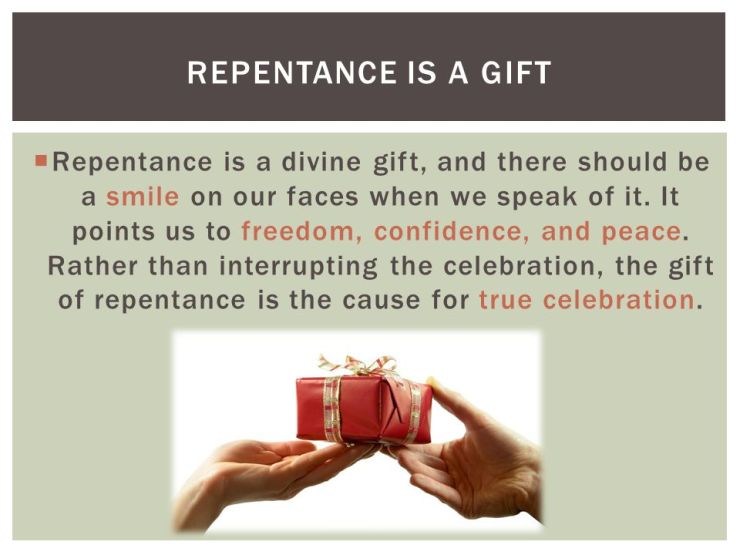
Lord, grant us today the gift of repentance. Call us ot of sin and into the faithful lives that you have set before us. Come, live in and through us, as we surrender our lives to your way, your will, your purpose, your plan, and your glory. Hallelujah, Amen!